
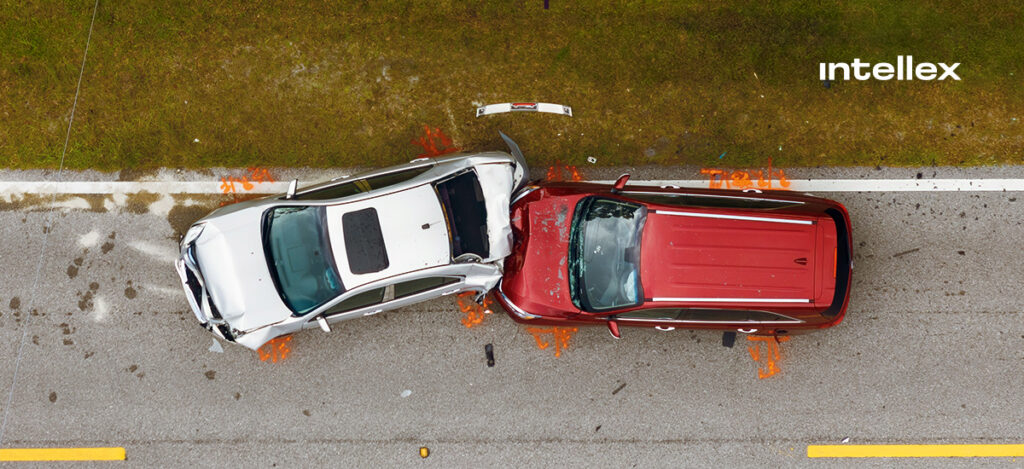
During the first half of 2025, there were approximately 17,140 traffic-related deaths. Reconstructing accidents accurately includes calculating speeds and determining impact areas. However, the one thing a reconstruction cannot detail is whether a driver is at fault for an accident.
The liability of an accident is a key element of bringing disputes to court. Ignoring the evaluation of real-world conditions makes it difficult to make an informed decision. Analyzing the human factors is vital for delivering a precise analysis when presenting reconstruction evidence.
This article outlines the role of human factors in accident reconstruction and highlights the benefits of confidently introducing a scientific defense.
What Are the Human Factors?
The human factors for accident reconstruction consider how a driver identifies a hazard while driving and how they respond to a specific incident. There are various human factors to consider in the driver reaction time accident analysis, including the time it took for a driver to react, visibility and fatigue.
With the inclusion of human factors, it is possible to accurately determine the cause of an accident and establish the driver’s role in it. Experts can investigate whether a driver had sufficient opportunity to respond effectively during a particular scenario.
What Is Perception-Response Time?
Perception-response time (PRT) refers to the chain of events that a driver experiences during an incident when they must take immediate action. The PRT evaluates the response time to incidents such as swerving to avoid a pedestrian walking out on the road.
Three key phases make up the PRT sequence:
- Perception: This is the moment when the driver spots the hazard before an accident. For example, the hazard may be noticing brake lights from a vehicle in front or driving on a different surface. The perception step is complete just before the driver takes action.
- Movement time: The next stage determines how long it takes for the driver to react to the hazard. The time frame measures an action, such as lifting their foot to use the brake pedal or using the steering wheel to change direction.
- Vehicle time delay: The last step of PRT examines the vehicle’s response to the driver’s actions. Vehicle time delay refers to the time difference between applying the brakes and the car slowing down, eventually coming to a complete stop.
PRT is a crucial element in developing an accident reconstruction. Determining the exact time it took a driver to take a specific action is a key factor in finding the truth and reaching a conclusion. PRT also examines whether factors such as road design or severe weather conditions contribute to the occurrence of an accident.
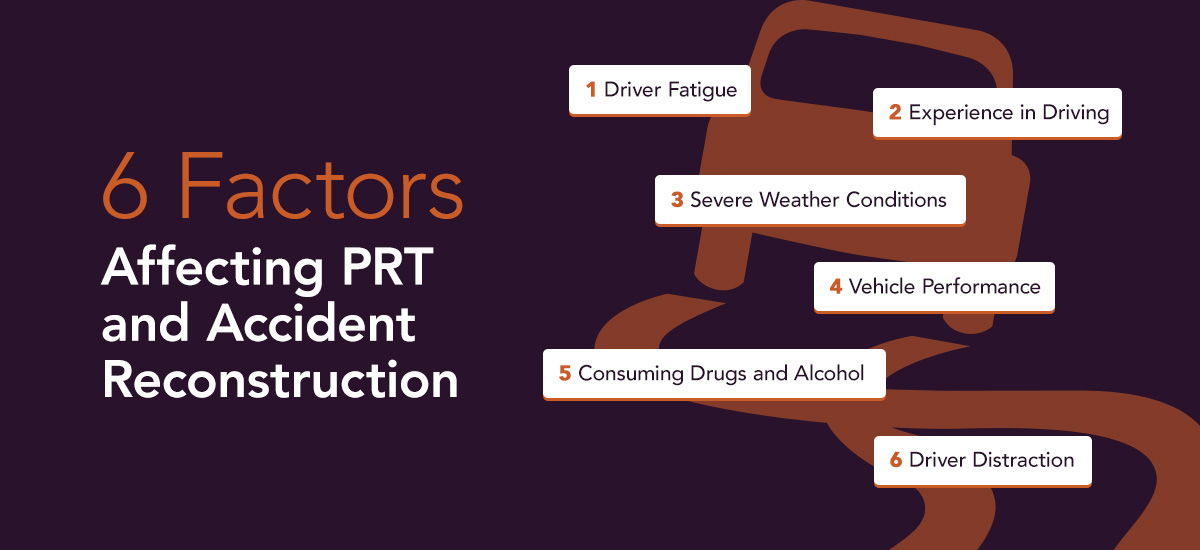
6 Factors Affecting PRT and Accident Reconstruction
Examining whether a driver has sufficient time to react before an accident involves considering various factors, including both human and environmental elements. Here is an overview of elements to consider:
1. Driver Fatigue
Falling asleep at the wheel is incredibly dangerous. A driver who falls asleep has a slower reaction time to hazards when they wake up. Even feeling drowsy or suffering fatigue makes the most minor driving tasks a considerable challenge.
A driver experiencing fatigue is slower than an alert driver at making appropriate decisions to avoid accidents.
2. Experience in Driving
The age of a driver affects the response time to hazards. For example, a younger driver naturally has faster reflexes in responding to hazards and avoiding accidents. However, younger drivers also lack the same experience as older drivers in clocking up miles on the road.
Older drivers with more experience usually know how to determine the best response, but they may experience deterioration in their vision and other health concerns, leading to delayed reactions.
3. Severe Weather Conditions
Poor weather conditions, such as heavy rainfall, snow and misty fog, can cause problems with vision. Severe weather can hinder a driver’s ability to react to hazards. For example, if a vehicle in front of a driver hits their brakes in foggy conditions, it will likely take the driver longer to react.
Furthermore, icy and snowy conditions make it more difficult for drivers to react quickly and bring their vehicles to a stop during emergencies.
4. Vehicle Performance
If a vehicle is experiencing issues with its performance, the time to react and prevent accidents is affected. Common vehicle problems affecting PRT include worn brake pads, bald or underinflated tires, and suspension or steering issues.
The vehicle’s condition is a key factor in determining whether its performance contributed to an accident.
5. Consuming Drugs and Alcohol
When a driver is under the influence of alcohol or drugs behind the wheel, it dramatically affects their ability to respond to hazards. Consuming only a small amount of alcohol still impacts decision-making skills and the ability to realize the severity of a situation.
Even legal drugs, including painkillers and antihistamines, can affect a driver’s responses.
6. Driver Distraction Accident Reconstruction
Using a mobile device or satellite navigation system can be a distraction from paying full attention to the road. When a driver becomes distracted, their responses to hazards are slower, and they may not have enough time to respond.
Other distractions include talking with vehicle passengers and adjusting their seating position or music station.
Steps of Using Human Factors in Accident Reconstruction
The benefit of using human factors in an accident reconstruction case is that it provides a clearer account of the incident. By analyzing how a driver perceives and responds to hazards, a court and jury can productively use the analysis with expert credibility:
1. Review the Case
The expert you appoint begins assessing the case based on the evidence and information you provide. Information may include deposition testimony, pictures and video content of the accident, and police reports.
When reviewing the case material, the expert will identify key information. This information includes the driver’s PRT and decision-making processes during stressful situations.
2. Explore the Timeline and Hazard
Your expert witness collaborates with reconstruction engineers to determine the timeline and sequence of events. The result helps to determine the driver’s response during various environmental conditions, including visibility and weather elements. Analysis also includes event data recorder (EDR) or “black box” information.
3. Apply Human Factors Research
In addition to environmental factors, the expert examines human factors and determines the driver’s role in the accident. For example, the expert examines the driver’s PRT and determines whether distractions contributed to the collision.
Furthermore, additional human factors may include evaluating a driver’s fatigue levels and alcohol use.
4. Determine Reasonable Actions
The expert has a duty to assess the driver’s actions and whether they were acting reasonably. Analysis takes into account both human factors and environmental considerations. By evaluating the reasonableness of the driver, the expert finds answers to invaluable questions.
These questions include whether there was enough time to take the best action.
5. Testimony Support and Documentation
Once the accident reconstruction analysis is complete, the expert compiles a comprehensive report that includes all the relevant information. For example, you can expect to find information regarding the sources used to determine results and potential limitations.
The expert also supports you through the deposition by preparing and presenting the testimony.
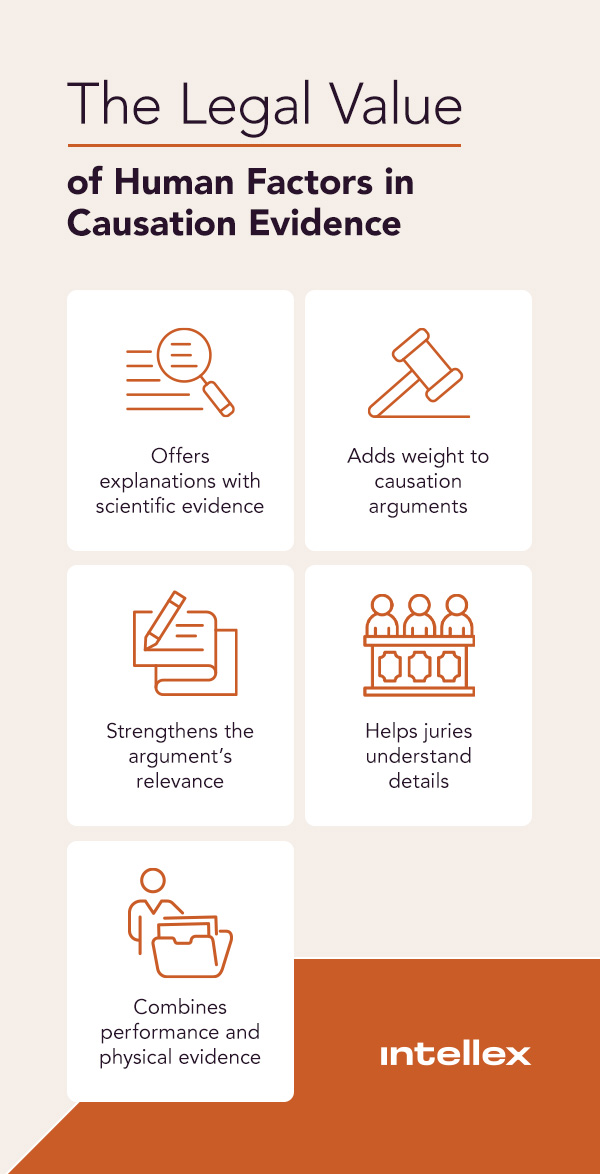
The Legal Value of Human Factors in Causation Evidence
Introducing human factors analysis helps to determine the events of an accident and the behavior of the individuals involved. Expert witnesses who communicate human factors can significantly strengthen legal testimony.
The witnesses present opinions based on scientific evidence, such as human behavior patterns. These science-based opinions align with Rule 702 and the Daubert Standard to determine the relevancy and reliability. The following outlines the legal value of human factors experts:
- Offers explanations with scientific evidence: Expert witnesses possess the knowledge and training to provide clear, scientifically relevant proof. Human factors experts can outline how a driver’s decision-making skills, attention and PRT contribute to an accident. Experts may also use research from reputable agencies, such as the National Highway Traffic Safety Administration (NHTSA).
- Adds weight to causation arguments: To determine whether a driver must take responsibility for an accident, human factors add credibility to uncover these details. Human factors pinpoint where a driver was potentially too slow to react and whether they took the wrong action.
- Strengthens the argument’s relevance: Expert witnesses give testimony based on valid methods and real-world evidence, thereby enhancing the argument’s credibility. The court examines the expert witness testimony and its relevance to the case, debating whether it meets the Daubert Standard and Rule 702 regulations.
- Helps juries understand details: Members of the jury may find some complex information about an accident difficult to understand. By implementing expert witnesses who can break down technical jargon and illustrate the human elements, a jury can feel more comfortable about making decisions. However, experts must ensure that the information they present is not speculative or overly simplified.
- Combines performance and physical evidence: With a strong combination of physical evidence and an overview of driver behavior patterns, an expert witness provides comprehensive testimony. Adding human factors enables a reconstruction case to bridge the gap between physical evidence and driver performance.
6 Considerations for Using Human Factors Experts
Despite the value of introducing human factors in accident reconstruction, you’ll need to consider a few things when seeking an expert. Ensure you acknowledge the following six points to determine the relevance of appointing an expert witness:
1. Knowledge About Admissibility Requirements
The experts you consider should be familiar with and confident about applying Rule 702 requirements that are relevant to your case. Understanding of these requirements will ensure that your case has the necessary testimony to be a reliable source of evidence. Experts reliably explain their opinions based on scientific evidence in an accessible format.
2. Check Human Factor Evidence Use
The human factor expert witnesses you work with should have the correct credentials to support your case. Additionally, experts must also be fully capable of interpreting human behaviors and presenting these findings to a jury. For example, an expert can clearly explain how a driver’s attention and perception of hazards impact an accident.
3. Become Familiar With the Expert’s Focus
When discussing details with an expert, ensure you have a clear understanding of their intentions and what they plan to present. Learning about specific testimony details, such as behavioral patterns, distractions and visibility, allows you to feel more comfortable about an expert’s approach to your case.
Exploring your expert’s approach also saves any confusion.

4. Consider the Expert’s Human Factor Experience
In addition to an expert’s qualifications, analyze their previous experience with similar cases. Discuss their knowledge of accident reconstruction cases to be confident about your choice of an expert witness.
Although many experts may have relevant experience, some possess more than others, or have specific knowledge pertinent to your case. Ensure you allocate enough time to research and find the right expert witness.
5. Discuss Consultancy With Technical Experts
To gain a better understanding of the expert witness’s approach, discuss how and why they collaborate with technical experts. For example, an expert witness may consult with engineers to gather data on a vehicle’s performance or a biomechanical analyst to further examine a driver’s behavior.
By incorporating technical data, the expert witness can effectively integrate the data and physical evidence to create a comprehensive testimony that includes human factors in the accident reconstruction.
6. Simplified Explanations for Juries
Ensure you find an expert witness with the knowledge and experience of interpreting complex data into digestible information for juries. If members of a jury fail to understand the evidence, the likelihood of a well-informed verdict decreases.
Simplifying details may involve explaining technical jargon and using visual aids to illustrate accident reconstruction.
Why Source Human Error Accident Reconstruction Experts
The specialized knowledge of accident reconstruction experts is a crucial component in delivering valuable expertise and guiding a jury to make informed decisions. Expert witness opinions are vital in ensuring that all parties and juries can understand the reconstruction and act with confidence.
Using expert witnesses also provides credibility to your case. Without detailed explanations and analysis of vehicle performance and human factors, it is impossible to understand how accidents occur and the reasons behind them.
Expert witnesses have the ability and experience to dispute the opposing side’s expert arguments and present a well-researched testimony.
Find Driver Behavior Accident Reconstruction Experts
At Intellex, our extensive network of human factors experts can become a valuable asset to your legal case. With expertise in over 40 major disciplines, our team ensures that you receive the best human factors expert, possessing the proper credentials and qualifications.
Particularly in accident reconstruction court cases, a human factors expert can identify potential areas contributing to an incident and testify as a legal witness. Your expert can advise on the following:
- Uncover information potentially missed during the initial investigation.
- Reveal the source of the accident and the individuals responsible.
- Break down complicated investigation details in a simpler format.
- Explain the link between the car accident and a person’s injuries.
Seeking a human factors expert? Our team provides reliable and on-demand support and analysis, along with tailored expertise to meet your specific requirements. Submit a request today, and our team will be in touch with a suitable expert for your needs.